by Kelsey Penrose
Nevada’s roots are deeply sown in the Agriculture industry, and as today is National Ag Day, it’s important we highlight both the history of agriculture in the Sierra Nevada, as well as those who continue to keep that history alive today.
Today, there are 160 farmers, ranchers and growers registered with Nevada Grown, the non-profit Nevada-focused growers association.
The Nevada Department of Agriculture lists 3,350 total registered farms, which recorded an average farm size of 1,821 acres. Major operations include growing hay and alfalfa, cow-calf operations, and animal feed crops.
From the time Nevada was still a territory to 2021, agriculture has been of such importance to the state — and the country as a whole — that it’s been allocated federal funding for its expansion since the 1800s.
At the University of Nevada, Reno, the state’s first university, the second building built on campus following Morrill Hall was a Congress-funded Agricultural Experiment Station. A 60-acre farm was deeded to the University by Washoe County in 1899 called the Valley Road Field Laboratory. While the experiment station was destroyed by a fire a year later, money was granted immediately to rebuild due to the importance of the program.
During the Great Depression when the agriculture program at UNR faced hard financial troubles, Max Fleischmann donated a 258-acre dairy farm to the University to continue their research. The Max Fleischmann Foundation later donated another $2.5 million for the construction of an agriculture building and a home economics building.
The county which held the most farms in 2020 was Elko County with 526 farms, followed by Churchill County with 504, and Washoe County with 353. Carson City was second to last with only 17 registered farms, Storey County finishing with 2.
According to the Nevada Department of Agriculture, “Agriculture is one of Nevada’s most important industries, contributing significantly to the economies of rural communities and the state as a whole. Nevada’s ranches may be few in number, but they rank third in the nation in size, averaging 3,500 acres.”
Nevada’s largest agriculture industries range from our local haying and cow-calf operations to dairy, sheep, lamb, hogs, potatoes, barley, wheat, corn, oats, onions, garlic, and honey, while smaller operations cover everything from mint to apple orchards and everything in-between.
In 2019, Agriculture had an economic output of $994.2 million in Nevada through its ranching and farming operations, according to the Nevada Department of Agriculture.
The newest agricultural operation for Nevada is hemp, which saw a massive increase in production in the Silver State during 2019. In 2016, there were under 20 growers statewide and in 2019, there were nearly 200.
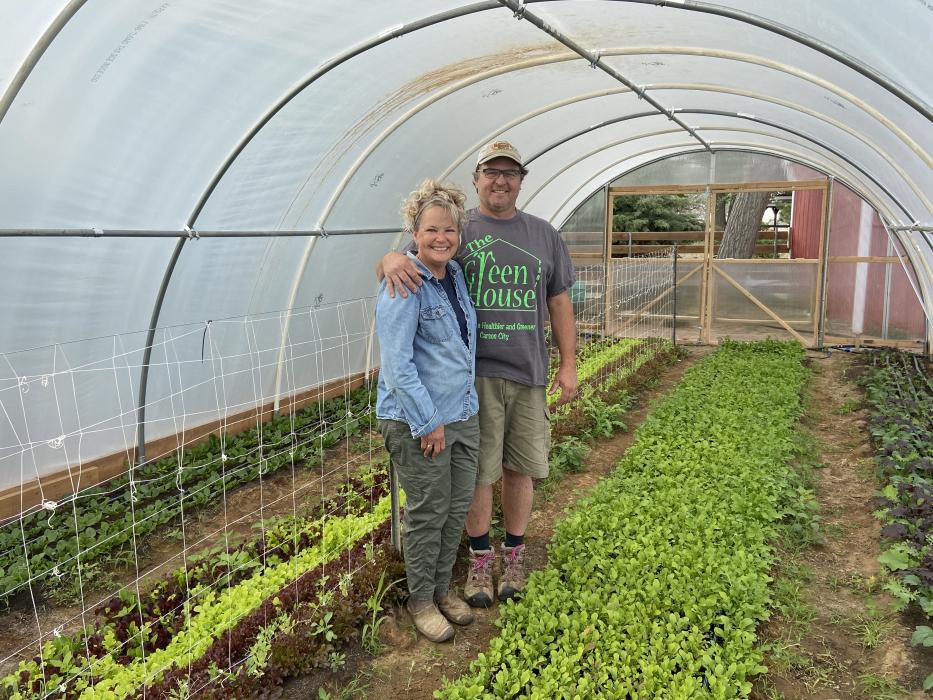
Whether a cow-calf rancher ranging on 1,000 acres of land, or a micro-greens grower on less than an acre in Washoe Valley, agriculture is a vastly important staple in Nevada’s history and culture.
The pandemic brought to light throughout the country how fragile the food-system is, and self-sufficiency has become more important to Americans as a result. Some seed companies saw as much as a 270 percent increase in seed orders during the week of March 10, 2020 alone, when then president Donald Trump declared a national emergency.
Even in Carson City when the UNR Extension Office offered a virtual “Grow Your Own” program, 400 people logged on, which was a huge increase in interest.
In a tweet sent out earlier Tuesday, the USDA Department of Agriculture said, “Agriculture is essential to everyday life, and we’ve seen the importance of American agriculture during the pandemic. Celebrate the individuals dedicated to feeding the world!”
To learn more about Nevada’s local growers and agricultural industries, visit Nevada Grown, The Nevada Department of Agriculture, or The UNR Extension Office for Carson and Storey County.